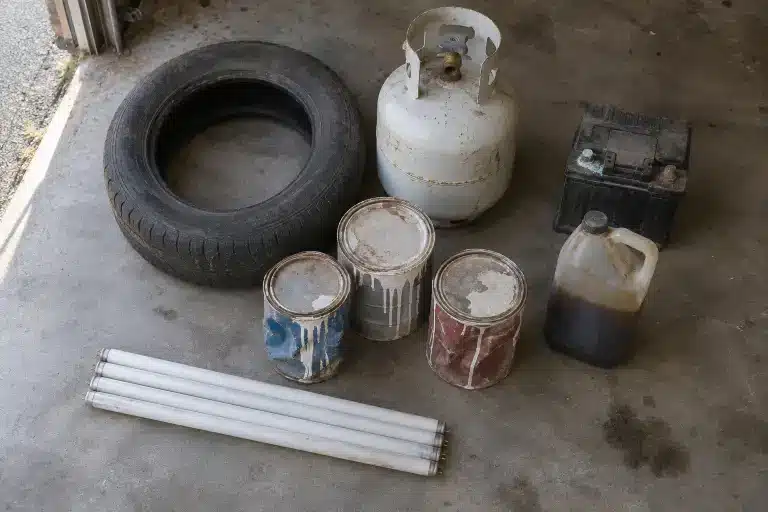
Anything hazardous or regulated. Tires, batteries, propane tanks, fluorescent tubes, paint, chemicals, gasoline and oil, biohazard material, and appliances that still have freon in them — refrigerators, freezers, window air conditioners and dehumidifiers. State rules keep that material out of every dumpster in North Carolina, not just ours, so no hauler in Wilson or anywhere else can take it.
The reassuring half of the answer is that the list of Wilson dumpster prohibited items ends there. Everything a normal cleanout, remodel or build produces is fine, and the restrictions below catch a small number of specific things rather than a broad category you have to think hard about.
Tires. Car, truck, trailer, on or off the rim. These are regulated separately everywhere in the state.
Batteries. Car and truck batteries above all, and rechargeable batteries from tools and electronics. Ordinary household alkaline batteries are a different matter, but anything lead-acid or lithium has to stay out.
Propane tanks and pressurized cylinders. Grill tanks, camping canisters, helium cylinders, old fire extinguishers. The concern is not only what is in them but that they are sealed and under pressure.
Fluorescent tubes and bulbs. Long tubes and compact bulbs alike. They contain mercury, which is what puts them on the list.
Paint, stains, solvents and chemicals. Liquid paint is the single most common thing we have to turn away. Pesticides, pool chemicals, adhesives and cleaning products belong in the same group.
Gasoline, oil and automotive fluids. Fuel, motor oil, transmission fluid, antifreeze, and the containers they came in if those still hold residue.
Biohazard and medical material. Sharps, anything contaminated with bodily fluids, and medical waste of any kind.
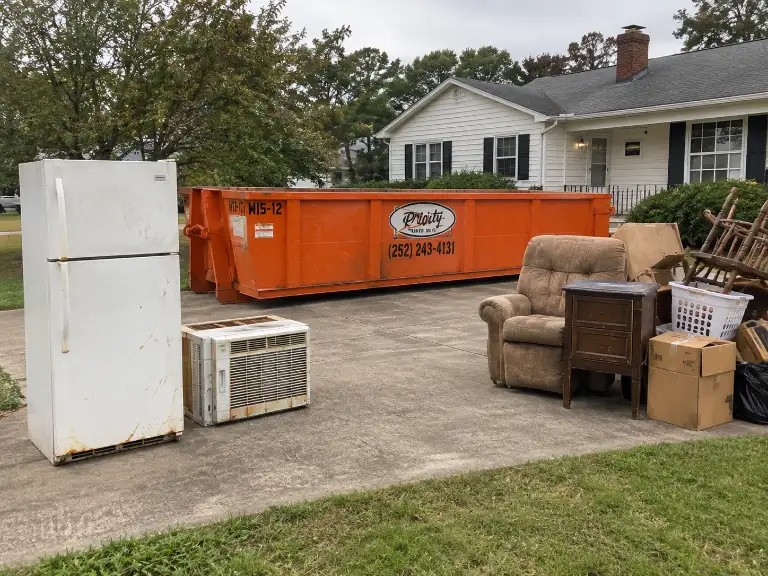
Appliances containing freon. Refrigerators, freezers, window air conditioning units and dehumidifiers. These cannot go in a dumpster until the refrigerant has been properly removed and the unit certified as cleared, and that clearance is the owner’s responsibility rather than something that happens at our end. Once a unit has been cleared, it is an ordinary piece of scrap metal and there is no problem with it.
It is worth saying plainly that none of this is a Priority Waste policy. Every entry on the Wilson dumpster prohibited items list is restricted under North Carolina rules that apply to any dumpster, any hauler, and any address in the state.
That matters for a practical reason. If a hauler quietly tells you to bury something from this list in the dumpster under other material, that is not flexibility and it is not them doing you a favor. It is a problem waiting to surface, and if it does, it can land on the person who rented the dumpster rather than on whoever suggested it. That is a risk worth declining on someone else’s advice.
Usually it is spotted before the load leaves. A driver who sees a propane tank or a can of paint sitting on top will say so, and the item comes out before the dumpster is taken.
When it is found after the fact, the material has to be separated out, which takes time nobody budgeted for and delays the job behind it. Neither outcome is a disaster, and neither is worth the trouble when a thirty-second question at booking avoids it entirely.
If you are not sure whether something qualifies, ask when you call. That is a far better use of the conversation than guessing, and nobody on our end minds the question.
Two kinds of property account for most of what we end up having to turn away, and both are common here.
The first is an older house. Wilson has a great deal of early-twentieth-century and mid-century housing stock, and a garage, basement or back shed that has belonged to the same family for forty years tends to hold forty years of paint, varnish, solvents and garden chemicals along with everything worth clearing. A cleanout at that kind of address nearly always turns up a small restricted pile. It is far better found the week before the dumpster arrives than halfway through a Saturday.
The second is rural property. Out through the county and the farmland around Elm City, Lucama, Stantonsburg and Black Creek, outbuildings collect old tires, fuel cans, batteries and agricultural chemicals the way town garages collect paint. If you are clearing a barn or a workshop, expect several things from the list above and plan a separate trip for them before the dumpster is even booked.
Neither situation is a problem. Both are considerably easier when they are expected, and both are routine work for us — dumpster rental across Wilson and the surrounding county is the bulk of what we do.
This is the part people actually need, and most of it is more convenient than expected.
Household hazardous waste collection. Paint, solvents, chemicals, pesticides and fluorescent tubes are handled through county household hazardous waste collection rather than any dumpster. Wilson County residents should check the county’s current schedule and drop-off arrangements, since these programs run on set dates rather than continuously.
Tires. Tire retailers generally take old tires when they sell you new ones, and most will accept them separately for a small handling charge.
Batteries. Auto parts stores take lead-acid batteries, usually with a core credit. Hardware stores and home centers commonly have collection points for rechargeable and lithium batteries.
Used oil and automotive fluids. Auto parts stores and service garages generally accept used motor oil, and many take antifreeze as well.
Propane tanks. Exchange cages at hardware stores, grocery stores and fuel suppliers will take a standard grill tank. Larger or unusual cylinders need the supplier who filled them.
Refrigeration appliances. An HVAC or appliance technician handles clearing the unit. Once that is done and documented, the appliance is scrap metal and can be dealt with normally.
Medical and biohazard material. Pharmacies and medical providers handle sharps and medical waste, and many pharmacies have take-back programs.
Details, hours and eligibility change, so confirm current arrangements locally before loading anything into the car.
Two different ideas get mixed up constantly, and the difference is worth holding on to.
The items above cannot go in a dumpster at all. A second group can go in, but not alongside everything else: roofing tear-off, heavy inert material such as concrete and brick, and yard and vegetative debris each need a dumpster to themselves. Those are not banned. They simply cannot share.
So a Wilson roofing job with an old grill tank in the garage has two separate things to sort out: the tear-off needs its own dumpster, and the tank is the only one of the two that is actually prohibited.
Far more than people assume, which is the point this page should probably end on. The dumpster takes almost everything.
Furniture, carpet, flooring, cabinets, fixtures, drywall, lumber, siding, windows, doors, general household contents, cleared scrap metal, and the ordinary mixed debris that comes out of a garage cleanout or a residential job. On the trade side, the same is true of nearly everything a construction or renovation project generates.
If your cleanout turns up two cans of paint and a car battery, set those aside and fill the dumpster with everything else. That is the whole of it.
Call (252) 246-9065 and run your list past us before you start loading. Describe what is coming out and we will tell you in a minute what stays out of the dumpster and what you can stop worrying about.